
Installation loudspeakers are devices designed for permanent mounting within a building or for integration into or onto a vehicl.
The classification below combines several approaches. Loudspeakers can be characterized based on:
- Mounting method (wall, ceiling, drywall/gypsum board)
- Enclosure type (round, rectangular, spherical)
- Acoustic properties (loudspeaker cabinets, sound projectors)
- Design (number of drivers, impedance 4/8/16Ω or 100V systems)
- Application (weather-resistant, water-resistant)
As a result, you may encounter, for example, a round ceiling loudspeaker, two-way design, with 16Ω impedance and weather-resistant construction, or other combinations of these features..
Common categories:
-
Ceiling loudspeakers
-
Wall-mounted loudspeakers
-
Sound projectors
-
Professional (PA) loudspeakers
-
Spherical loudspeakers
-
Horn loudspeakers
-
Loudspeaker cabinets
-
Outdoor loudspeakers
-
Subwoofers
Types of Installation Loudspeakers:
Ceiling Loudspeakers
Ceiling loudspeakers are structurally designed for installation in drywall (gypsum board). Despite the name, they can also be mounted in walls constructed using the same technology. They are most commonly equipped with dog-leg clamps that tighten against the ceiling panel as the mounting screws are secured. Spring-loaded mounting clips are also used in some models. Versions with a back enclosure are available, where the loudspeaker is attached to the enclosure after it has been installed in the ceiling or wall..
Entry-level models typically feature a single full-range driver, making them suitable for voice announcements and low-level background music. More advanced models are two-way (or less commonly three-way) designs, where a tweeter is usually mounted coaxially in front of the woofer. The extended frequency response achieved by using multiple drivers enables high-quality reproduction of both speech and music.
Such loudspeakers are recommended for installations in restaurants, hotels, and conference rooms, where high audio quality is required..
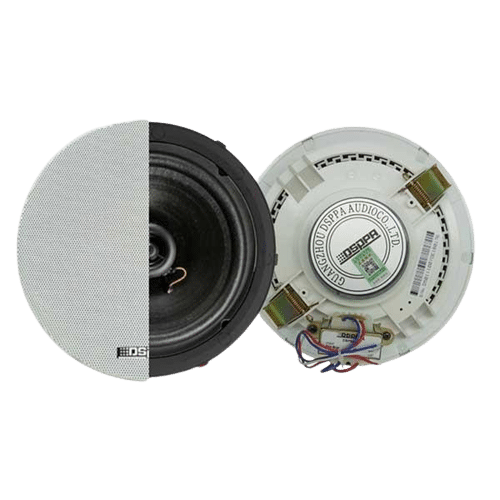
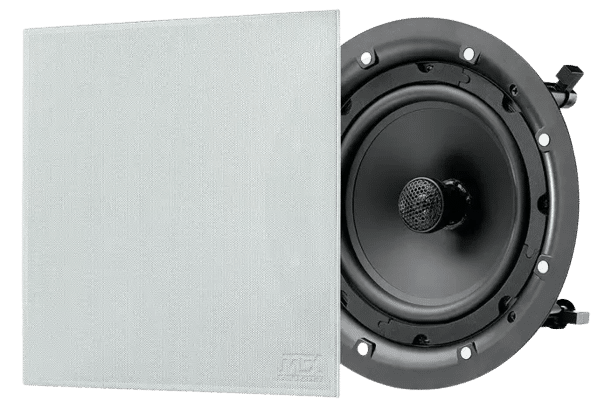
Ceiling loudspeakers, like other types, may have nominal impedances of 4Ω, 8Ω, or 16Ω, allowing multiple units to be connected on a single line - typically from one to four loudspeakers, depending on the amplifier’s minimum load impedance.
However, the most common solution in installation systems is the use of built-in transformers that match the loudspeaker to a 100V line. Such 100V loudspeakers are widely used in installations requiring a large number of units to cover extensive areas. In these systems, impedance is not the primary consideration - instead, power rating determines system configuration.
For example, a 120W / 100V amplifier can supply:
- 12 loudspeakers rated at 10W / 100V, or
- 20 loudspeakers rated at 6W / 100V
It is considered good practice to leave a 10-15% power reserve in the amplifier relative to the total loudspeaker load. However, this is not strictly required, as speech and music signals do not continuously utilize maximum system power.
Ceiling loudspeakers typically have a rated power range from 1.5W to 100W. The upper limit is often constrained by the weight of larger driver magnets, which can make installation in drywall ceilings difficult or impractical.
From an acoustic perspective, ceiling loudspeakers are generally characterized by wide dispersion angles (i.e., broad sound coverage). When planning their placement, special attention should be given to the installation height:
- Low ceiling installations may result in uneven sound pressure distribution (noticeable differences in loudness depending on listener position).
- Very high ceiling installations can lead to reduced speech intelligibility, depending on loudspeaker power, sensitivity, and room acoustics.
If in doubt, professional system design support is recommended to ensure optimal performance.
Wall-Mounted Loudspeakers
Wall-mounted loudspeakers are equipped with a mounting bracket or suspension point. In practice, they can also be installed on ceilings or other flat surfaces - the term “wall-mounted” is therefore conventional rather than restrictive.
Installation of sound systems is typically carried out in two stages:
- Cable routing
- Equipment installation
Modern wall-mounted loudspeakers are often supplied with mounting brackets that include integrated connectors, allowing them to be installed during the first stage. This solution also improves aesthetics, as the speaker wiring remains hidden.
As a result, the loudspeakers themselves can be quickly and conveniently installed after all construction work has been completed, ensuring both efficiency and a clean visual finish.
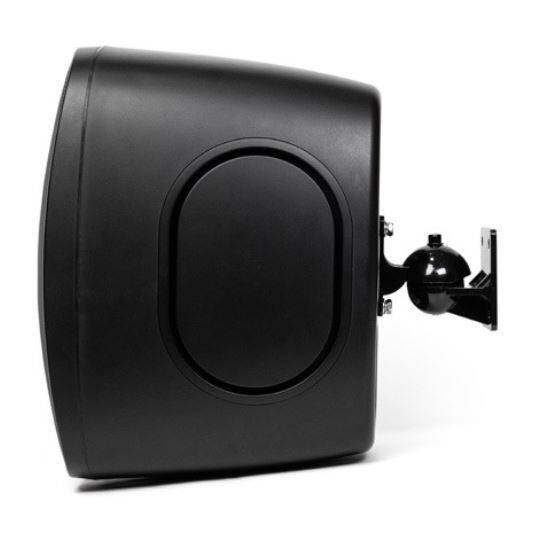
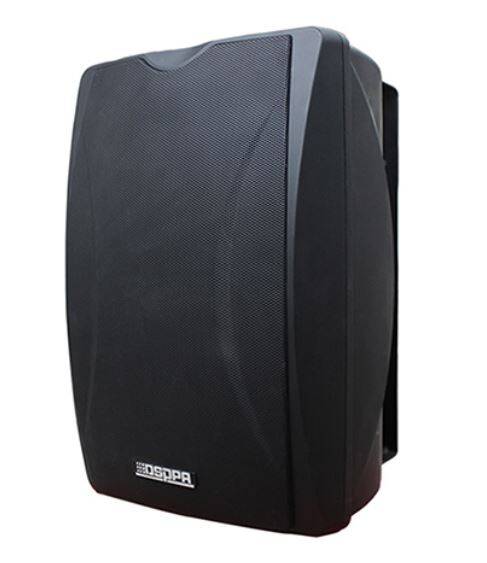
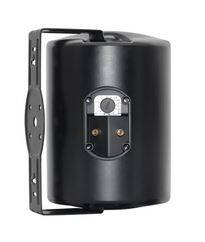
Due to the wide variety of drivers used, their configuration, and enclosure shapes, wall-mounted loudspeakers can exhibit significantly different directivity characteristics.
Depending on the system design requirements, the selection should be made carefully based on technical specifications and, where applicable, supported by acoustic simulations to ensure optimal coverage and performance.
Sound Projectors
Sound projectors are a type of wall-mounted loudspeaker. The name refers to the concept of “projecting” sound, similar to how light is directed. Their design enables precise sound control in two planes, which is typically more difficult to achieve with other types of loudspeakers.
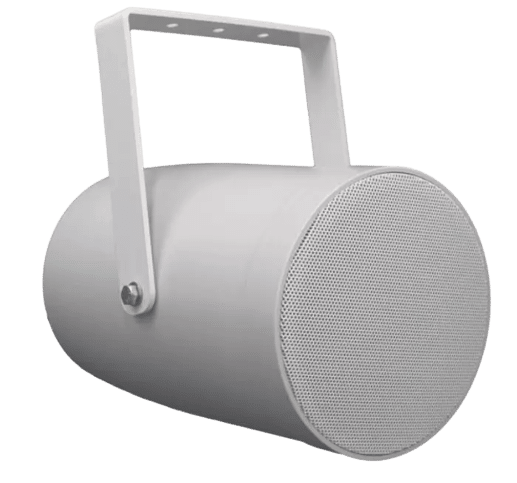
Sound projectors are typically equipped with a full-range driver, providing sound quality sufficient for voice announcements and low-level background music reproduction.
Professional (PA) Loudspeakers
Sound reinforcement systems for auditoriums and performance venues are most often implemented by companies specializing in live event production. However, such facilities are frequently equipped with a basic electroacoustic system that must meet the requirements of amateur performances, presentations, and smaller-scale concerts.
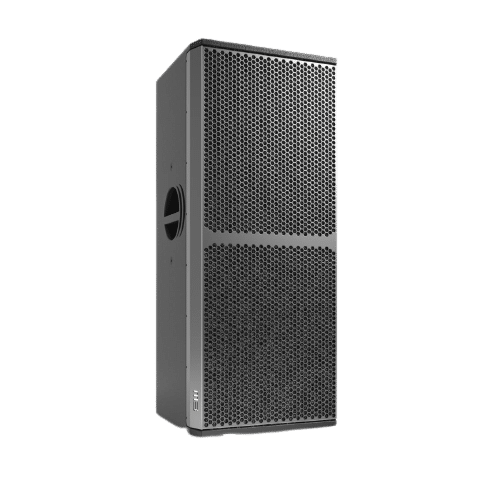
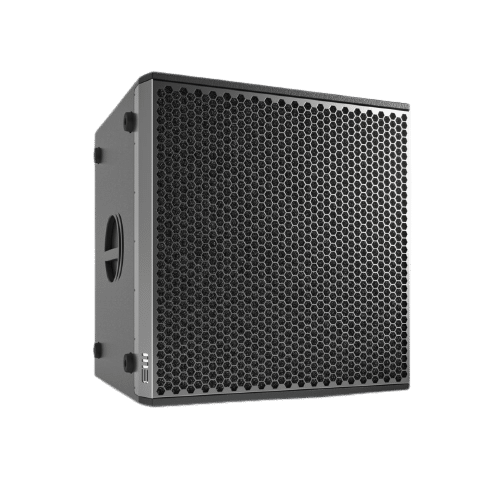
Achieving uniform, high-quality sound coverage across large areas (or volumes) requires the use of two-way or multi-way loudspeaker systems with high power handling and high sensitivity.
Professional (PA) loudspeakers are significantly larger than wall-mounted speakers - although the latter can also reproduce music, they are not capable of delivering comparable sound pressure levels. The larger size of PA systems results from the design of high-power drivers, which require large, heavy magnets, as well as appropriately sized voice coils and diaphragms. Additionally, waveguides (horns) are often used, and their dimensions must correspond to the wavelengths of the acoustic signals being reproduced.
In professional sound reinforcement systems, dedicated low-frequency loudspeakers (subwoofers) are often employed to generate the required sound pressure levels in the low-frequency range.
The entire system requires careful design, including the optimal positioning of loudspeakers and precise system tuning, in order to achieve the most uniform frequency response, which directly determines perceived sound quality.
Safety is a critical requirement for PA systems. Each loudspeaker must be securely mounted, and additionally protected with a safety cable, which serves as a backup to prevent injury or damage in the event of a primary mounting failure.
Spherical Loudspeakers / Pendant Loudspeakers
Pendant loudspeakers are installed in spaces where mounting loudspeakers directly on the ceiling would either be acoustically unfavorable or technologically impractical.
A loudspeaker suspended at a greater height can cover a larger area than one installed lower. However, it should be noted that increasing the mounting height also increases the distance to listeners, which results in lower perceived sound levels compared to installations at lower heights.
The suspension cable allows for adjustment of the distance between the loudspeaker and the listener, enabling optimization of both coverage and sound level distribution within the space.
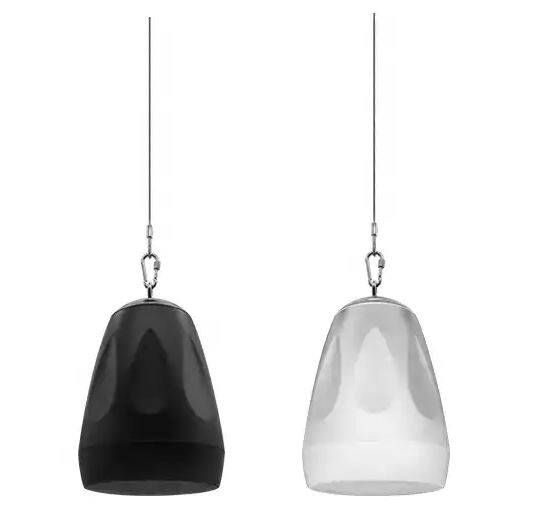
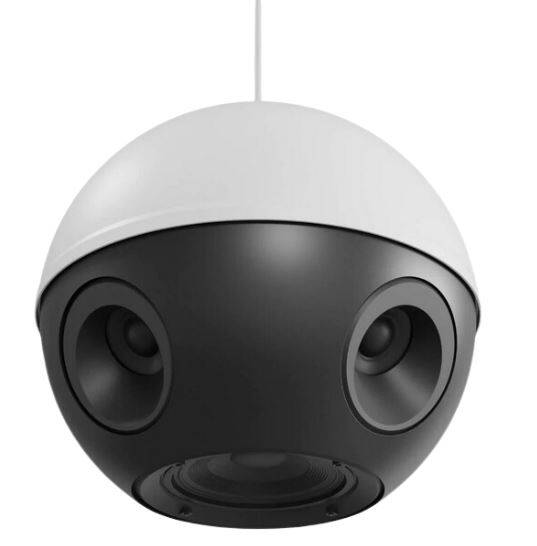
The shape of pendant loudspeakers significantly influences their directivity characteristics. Spherical loudspeakers typically offer a coverage angle close to 180°, enabling effective sound distribution over a wide area.
They are most commonly used in retail spaces, warehouses, and high-ceiling corridors, where broad, even coverage is required.
Horn Loudspeakers
The key distinction between horn loudspeakers and other designs lies in the use of a waveguide (horn). By matching the mechanical impedance of the driver to the acoustic impedance of air, the horn significantly increases the loudspeaker’s efficiency (sensitivity). Higher efficiency means that the loudspeaker can generate a higher sound pressure level for the same input power - in simple terms, it plays louder with the same amplifier power.
Since impedance varies with frequency, the use of a horn also results in a limited frequency response range. For this reason, horn loudspeakers are typically used for voice announcements, as the speech frequency range is much narrower than that required for full-range music reproduction.
Thanks to their high efficiency, announcements can be clearly heard over long distances (compared to lower-efficiency loudspeaker systems), even when using lower-power amplifiers.
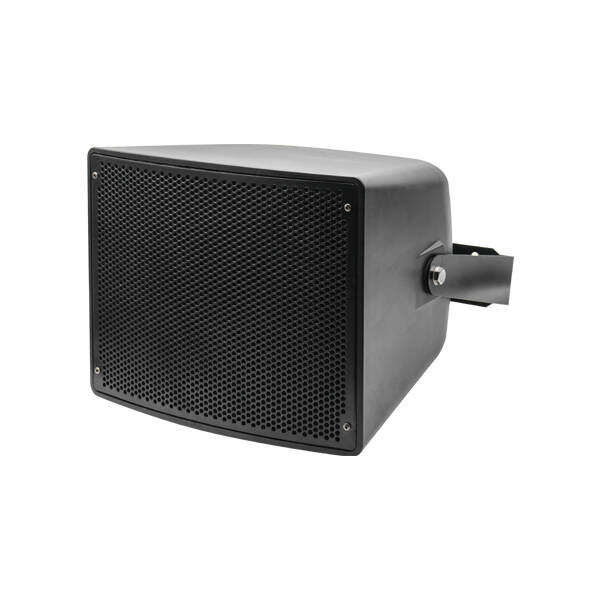
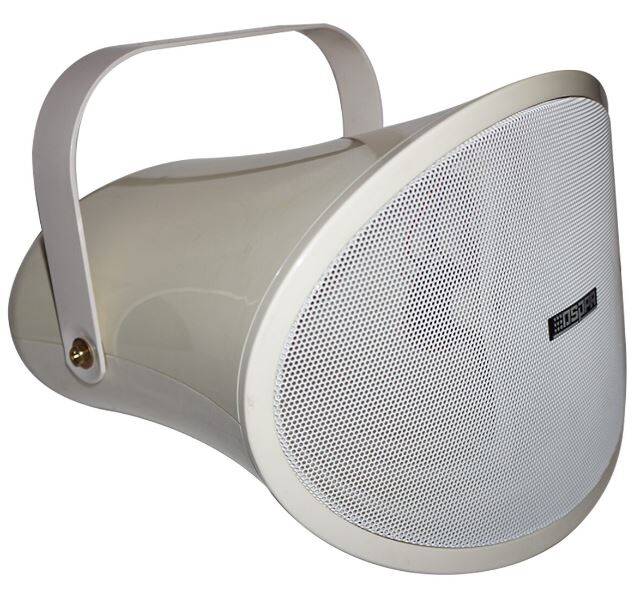
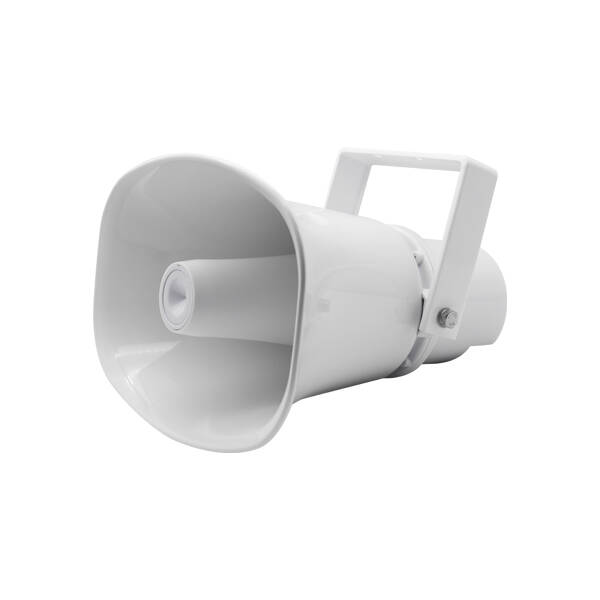
For sound reinforcement of very large areas, such as parking lots, recreational areas, or ski slopes, manufacturers offer multi-way horn systems composed of multiple waveguides. This type of design allows for an extended frequency response range while maintaining the high efficiency characteristic of horn loudspeakers.
Column Loudspeakers
In electroacoustics, a column loudspeaker is a source of a cylindrical acoustic wave. In installation systems, column loudspeakers typically consist of arrays of drivers (usually identical), characterized by a very wide horizontal dispersion angle - in simple terms, they provide broad coverage horizontally and narrow coverage vertically.
Another important feature of column loudspeakers is that the sound pressure level decreases by only 3dB when the distance is doubled. For conventional loudspeakers, treated as point sources, the drop is 6dB. This allows column loudspeakers to maintain a higher sound level over longer distances.
These characteristics make column loudspeakers particularly suitable for electroacoustic installations in auditoriums, where controlled coverage and speech intelligibility over distance are crucial.
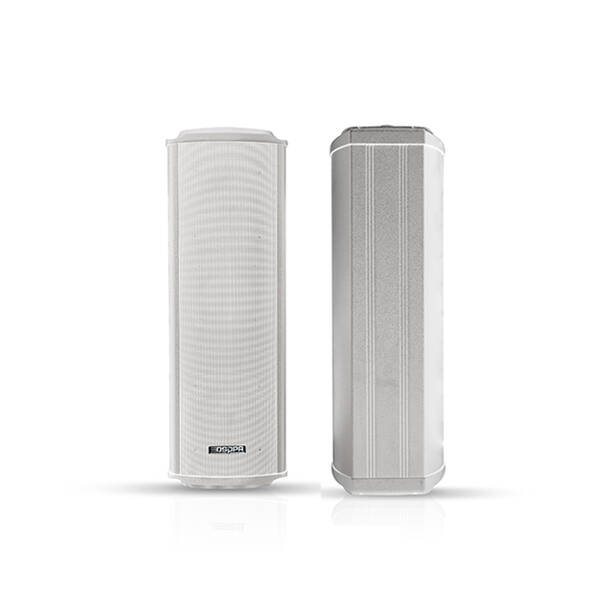
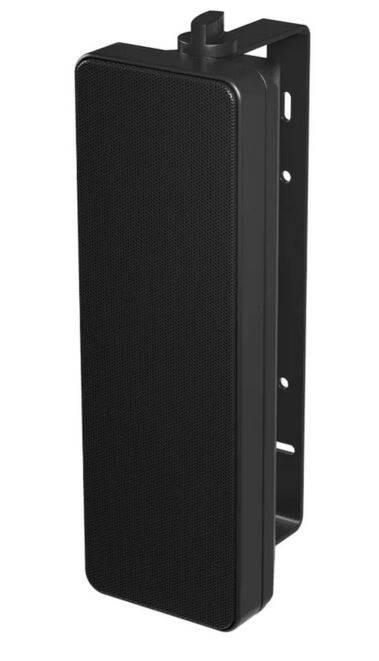
The frequency response of column loudspeakers is typically limited due to the use of multiple small-diameter drivers. For this reason, column loudspeakers are highly suitable for speech reproduction, but less suitable for music playback, where a wider frequency range is required.
Outdoor Loudspeakers
Sound reinforcement for areas such as fuel stations, sports fields, swimming pools, or gardens requires the use of weather-resistant loudspeakers. If installation under a roof is possible - so that the loudspeakers are not directly exposed to rain, snow, or other precipitation - it is sufficient to select models with corrosion-resistant enclosures, typically made of plastic or aluminum.
However, when loudspeakers are directly exposed to weather conditions, it is necessary to use designs that are not only corrosion-resistant, but also fully sealed, with moisture-resistant driver cones.
Until recently, horn loudspeakers were the most commonly used solution in such environments. Today, however, more advanced designs are increasingly preferred, offering significantly improved sound quality while maintaining a high level of weather resistance.
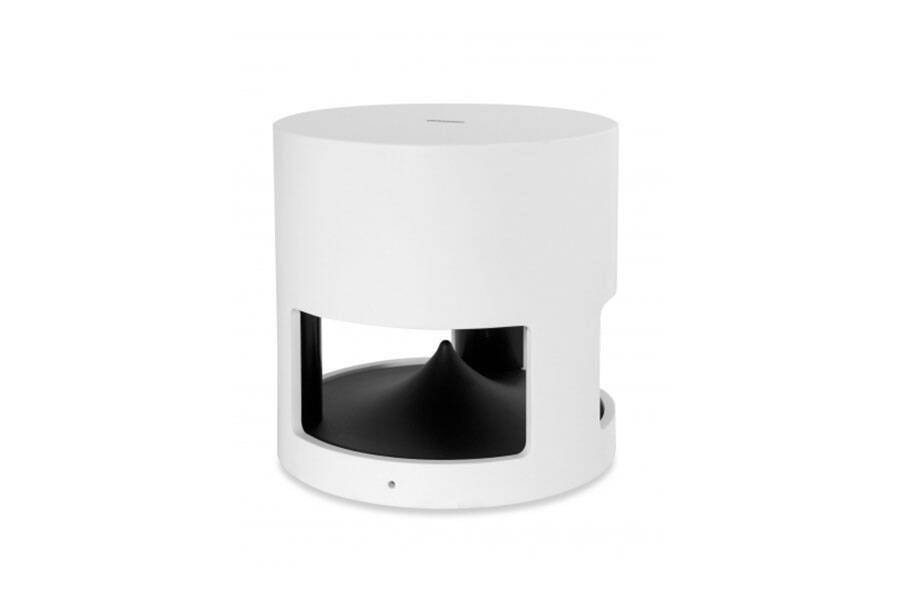
The resistance of loudspeakers to dust and moisture ingress is defined using IP (Ingress Protection) ratings.
Subwoofers
The dimensions of installation loudspeakers are typically a compromise between aesthetics, architectural constraints, and acoustic requirements. A direct consequence of compact enclosure sizes and small-diameter drivers is a limited ability to reproduce low frequencies.
In installations where music playback is required, subwoofers are used to extend the low-frequency range and provide full, balanced sound reproduction.
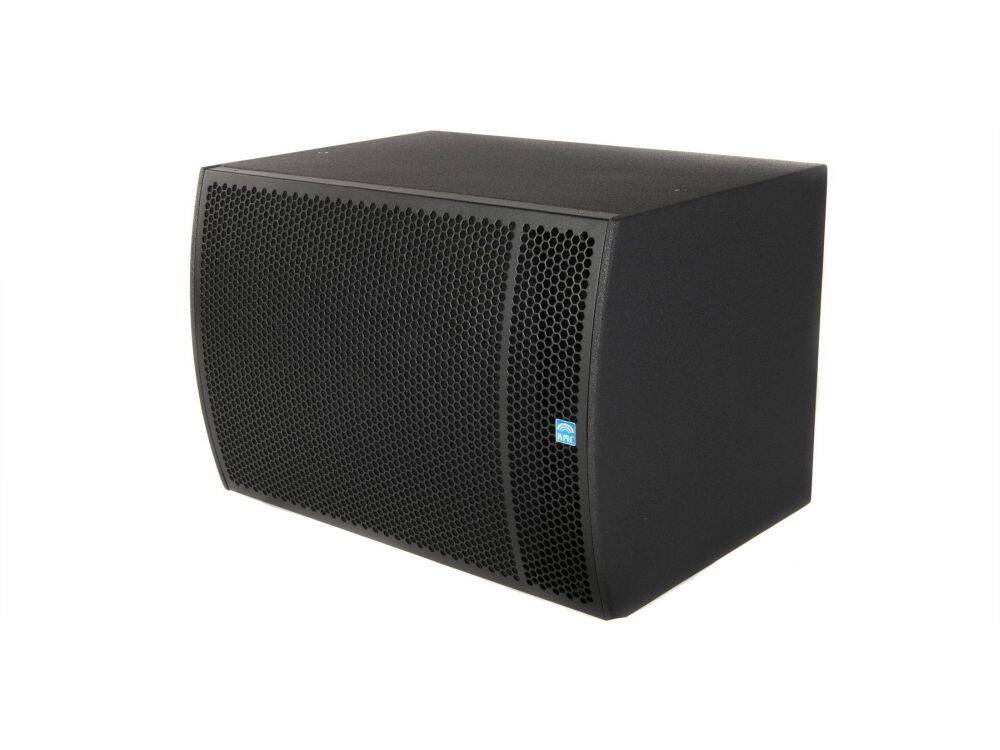
One of the most common challenges faced by designers and installers is determining the appropriate placement of relatively large subwoofers, as well as properly tuning the system. The goal is to achieve a balanced sound response, without excessive emphasis on certain frequency ranges and without introducing boomy or resonant bass within the space.


